This guide is general education, not legal, tax, investment, or title advice. Mexican law, bank requirements, government fees, and each property's history can change the answer. Use an independent Mexican attorney and the transaction's notario, and ask for a written closing-cost estimate before committing funds.
01The short answer
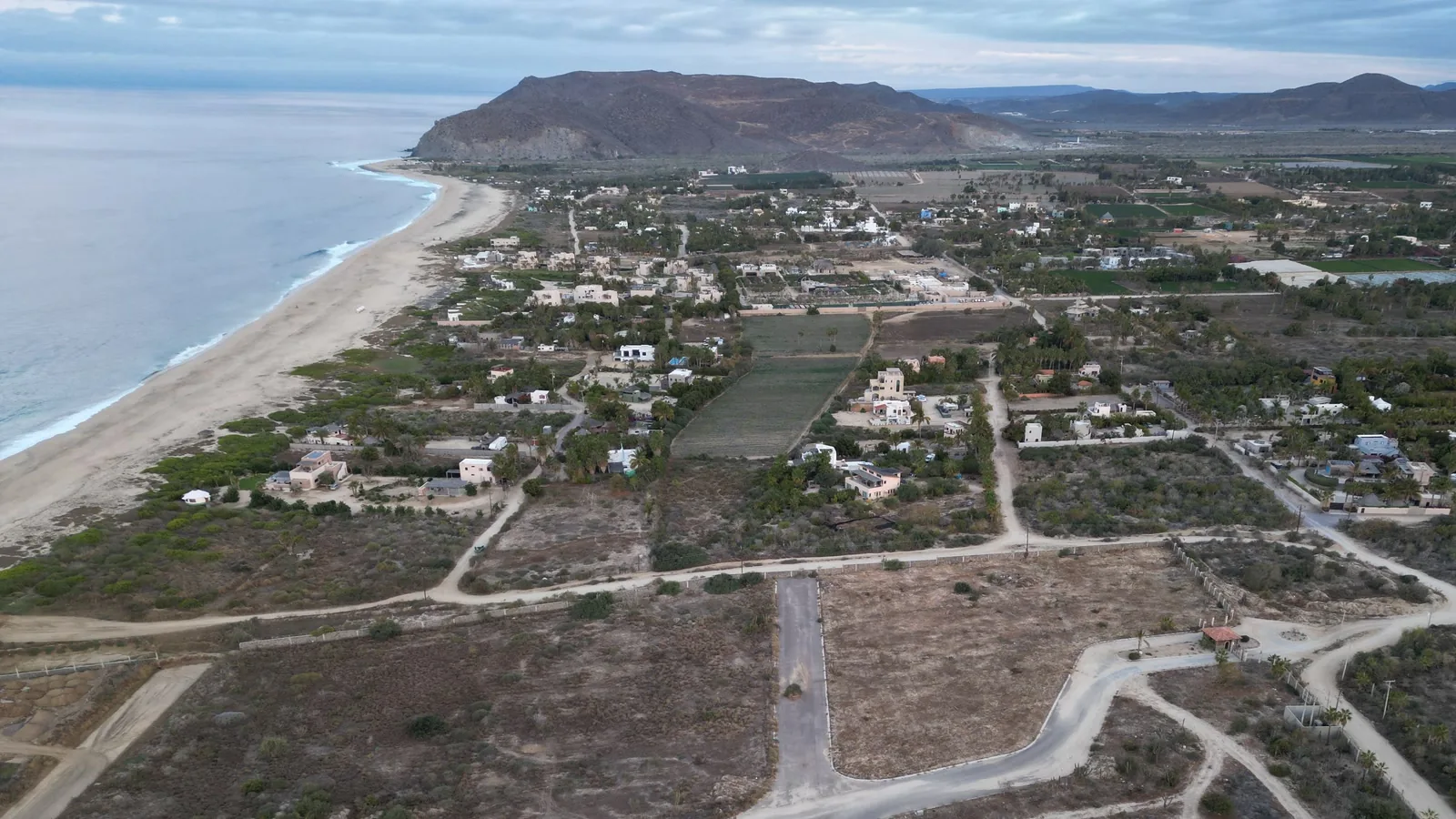
Mexico's constitution restricts direct foreign ownership within 50 km / 31 mi of the coast — which is this entire corridor. The solution has been standard practice since 1973: the fideicomiso, a renewable 50-year bank trust that gives you every right of ownership. You buy, sell, build, rent, and will it to your kids. Tens of thousands of foreigners hold Baja coastal property exactly this way.
So the question isn't whether you can own here. It's whether the specific parcel you've fallen for has clean, registered, private title — and that's where this article earns its keep.
02The fideicomiso, plainly
A Mexican bank holds legal title as trustee; you are the beneficiary with broad rights to use, improve, lease, sell, and pass the beneficial interest to successor beneficiaries, subject to the trust and Mexican law. It is not a lease. Terms can run up to 50 years, and renewals require the applicable government and bank process.
What it costs: market estimates for the initial bank acceptance and government permit often land around $2,000-3,000 USD, with annual bank fees often around $500-700 USD. Those are planning estimates, not official quotes. Get the current bank schedule and notario estimate for the exact property. Predial (annual property tax) is a separate local charge.
The corporation alternative: a Mexican corporation can own restricted-zone land directly, and it's the right tool for genuinely commercial projects (multiple rentals run as a business, development). It is the wrong tool for "I want a beach house with less paperwork" — corporations carry monthly accounting obligations and tax filings forever. For a home, the fideicomiso wins.
03Who does what (it's not the US cast)
The notario público is the load-bearing wall of a Mexican closing and nothing like a US notary: a government-appointed attorney who verifies title, calculates and withholds taxes, drafts the deed, and records it. The notario works for the transaction's validity, not for you personally.
Your own attorney is who works for you. On a straightforward titled property, some buyers skip this; on anything with history — subdivided land, inherited parcels, anything formerly ejido — independent counsel is the best few thousand dollars in the deal.
Escrow is not automatic. Mexico has no default escrow system; funds handling is arranged per-deal, usually through a US or cross-border escrow company. No serious transaction here should involve wiring money directly to a seller. Title insurance from US-affiliated companies is also available for many properties and worth pricing.
The broker. Baja California Sur regulates professional real-estate agents and maintains a public licensing framework. Ask which licensed person or legal entity is responsible for the transaction and verify that status. AMPI membership, track record, references, and local diligence remain useful additional filters. (I work locally through Selling Sur.)
04Ejido land: where the horror stories come from
Every Baja horror story you've heard — the fence that appeared overnight, the family that "bought" a beachfront lot twice — traces back to the same root: ejido land, communal agricultural land created after the Revolution. A huge share of rural Baja, including parts of this corridor, started as ejido.
Ejido land can become legitimate private property through a formal privatization process (dominio pleno), and much of the corridor's titled land went through exactly that, cleanly, years ago. The danger is land that hasn't: rights sold on a handshake, assembly approvals missing, heirs surfacing later. An unprivatized ejido "purchase" by a foreigner isn't a risky title — it's often no title at all.
If a deal requires you to "hold rights" while privatization finishes, or the price looks like a typo, you are not buying property — you are funding someone else's land dispute. Walk, or bring a very good attorney and the patience of a saint.
05The process, start to keys
Offer & contract (promissory agreement, usually with 5–10% deposit into escrow) → due diligence (title search at the Public Registry, no-lien certificate, land-use/zoning check, water and utility verification — weeks, not days) → trust permit (bank + Ministry of Foreign Affairs paperwork for your fideicomiso) → closing at the notario (deed signed, taxes withheld, funds released) → registration (the deed records at the Public Registry; you get the escritura). All-in, a clean deal commonly runs 2 to 4 months; anything involving trust setup rarely beats 60 days.
One corridor-specific note: water is due diligence here, not an afterthought. A parcel's well rights, hookup status, or pipa-truck reality changes its value and your build plans — our water & power report covers the landscape.
06The real closing math
Buyers generally carry several closing charges in Mexico. A rough planning range is often 5-8% of purchase price, including the applicable acquisition tax, notario and registry charges, trust permit and bank setup, escrow, and any title insurance. The exact tax base and charges vary. Require a written estimate from the notario for the specific transaction. On a later sale, income-tax treatment can also be material, which is one reason the deed should accurately state the transaction value.
Financing barely exists here in the US sense; this is overwhelmingly a cash market, occasionally seller-carried. Price your plans accordingly.
07Seven questions that protect you
Ask these and you're ahead of 90% of buyers: 1. Is the title private property registered at the Public Registry — may I see the escritura? 2. Was this ever ejido, and if so, when did dominio pleno complete? 3. Certificate of no liens — current? 4. Does the legal description match the fence lines (survey)? 5. What are the water rights/source, exactly? 6. Any CFE service on the parcel, and where's the nearest transformer? 7. Will the full price be on the deed?
A seller or agent who gets cagey on any of the seven has answered your real question.
08Quick answers
Do I need residency to buy? No — see the visa guide. Tourists buy property here every week.
Can the government take my fideicomiso property? The trust is registered, constitutional, half-century-old machinery, not a loophole. The real risks in Baja are title defects and bad process, not expropriation.
Is it inheritable? Yes — you name substitute beneficiaries in the trust itself, which lets it pass outside probate. Do this at purchase, not "later."
What about the corridor's market itself? Browse every current corridor listing without signing in; this article is the machinery, not the market call.
Where do I start? Browse first. If you want recent comparable sales, property-value context, or help narrowing the four corridor zones, use the optional information form. Every field is optional.
09Official sources and verification
[1] Secretaría de Relaciones Exteriores, restricted-zone fideicomiso permit · [2] Federal Foreign Investment Law, Articles 10A-12 · [3] Mexican Consulate, acquisition of property in Mexico · [4] PROFECO, property-document and notario checks · [5] Government of Baja California Sur, professional real-estate agent licensing. Fee and timing ranges in this article are field estimates, not government schedules. Confirm them in writing for the transaction you are considering.
Curtis brokers real estate through Selling Sur in the Todos Santos–Pescadero–Cerritos corridor, and lives in Pescadero, at San Pedrito Beach. He doesn't sell a fantasy; he sells information so you can make a smart call, including the call that Baja isn't right for you.