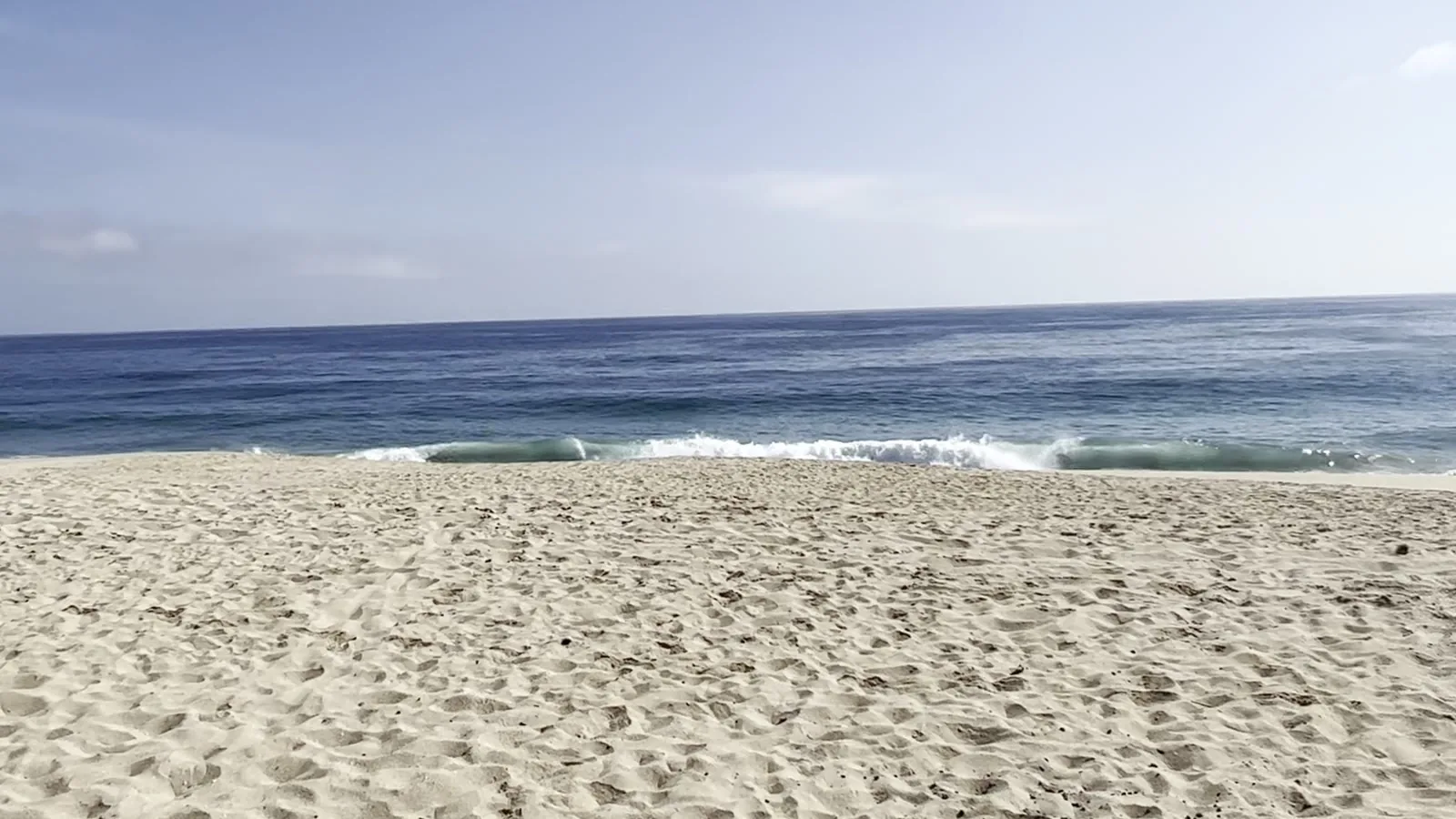
Every week, and I mean every single week, I get a DM from someone in California or Colorado who found Todos Santos on Instagram. They watched a couple of surf videos from Cerritos, saw a casita listed for less than their Bay Area rent, and now they're moving to Baja.
I love that energy. I'm one of those people. I walked away from a twenty-year commercial real estate career in the U.S. and moved to the Cerritos–Pescadero corridor. I'm not going back. But I'd be doing you a disservice if I didn't give you the real version. Instagram Baja and actual Baja are related. Same place. But one of them leaves out about 60% of the picture. This is that other 60%.
01The paperwork that will wreck you if you ignore it
Nobody moves to Mexico dreaming about tax IDs. Here we go anyway.
The RFC. Registro Federal de Contribuyentes: your Mexican tax number, like a Social Security number for fiscal purposes. You need it to open a bank account, sign a lease, issue an invoice, or run any kind of business. Getting one means a trip to the SAT office (Mexico's IRS, with worse wait times). Bring your passport, proof of address, and a good attitude.
The FIEL / e.firma. Your electronic signature certificate, also from SAT. Required for online filings and digital invoicing, which Mexico takes seriously. If you run a business or own property through a corporation, this is non-negotiable.
And Uncle Sam. The U.S. taxes its citizens on worldwide income. You still file a 1040. More than $10K aggregate in foreign accounts? FBAR. Own a Mexican corporation? Potentially more filings.
Get a cross-border CPA. Not a regular accountant. Not your buddy who does taxes for a six-pack. A professional who knows both systems. This is the one place where being cheap costs you a fortune.
02Banking: a character-building experience
Opening a Mexican bank account is a journey. RFC, proof of address, passport, migration documents, and each bank wants slightly different versions of all of it. Expect multiple visits.
Once it's open, it works. Online banking is functional if a little clunky. Cross-border wires go through, but they're slow and the fees add up, so most expats I know keep accounts on both sides and use Wise to move money at exchange rates that don't make you wince.
Day to day? Cash is still king. The tiendas, the farmers market, many restaurants: cash only. ATMs exist in Todos Santos; there's one near Cerritos; Pescadero is hit-or-miss. Don't be the person at the fish taco stand with nothing but an Amex.
03Internet, power & water
Internet. Todos Santos proper has gotten solid. Totalplay and Telmex run fiber in parts of town, workable for Zoom and remote work. Cerritos and Pescadero are spottier: newer developments built connectivity into the plan; older and more rural lots may mean cellular or satellite.
Starlink changed the game. I know multiple people running actual businesses from Cerritos entirely on Starlink. If you're buying outside the town center and you work remotely, budget for a kit and think of it as a business expense that also streams Netflix.
Power. CFE generally works, but outages happen; summer heat plus everyone's AC equals a stressed grid, and September storms don't help. Many homes carry backup generators or solar. Building from scratch? Go solar. Sun is the one thing Baja has in unlimited supply.
Water. This is desert. Municipal water is limited; many houses run tinacos on the roof and cisternas below, and some areas rely on trucked delivery. Get a filtration system. You will not drink from the tap.
04Roads: learn to love dirt
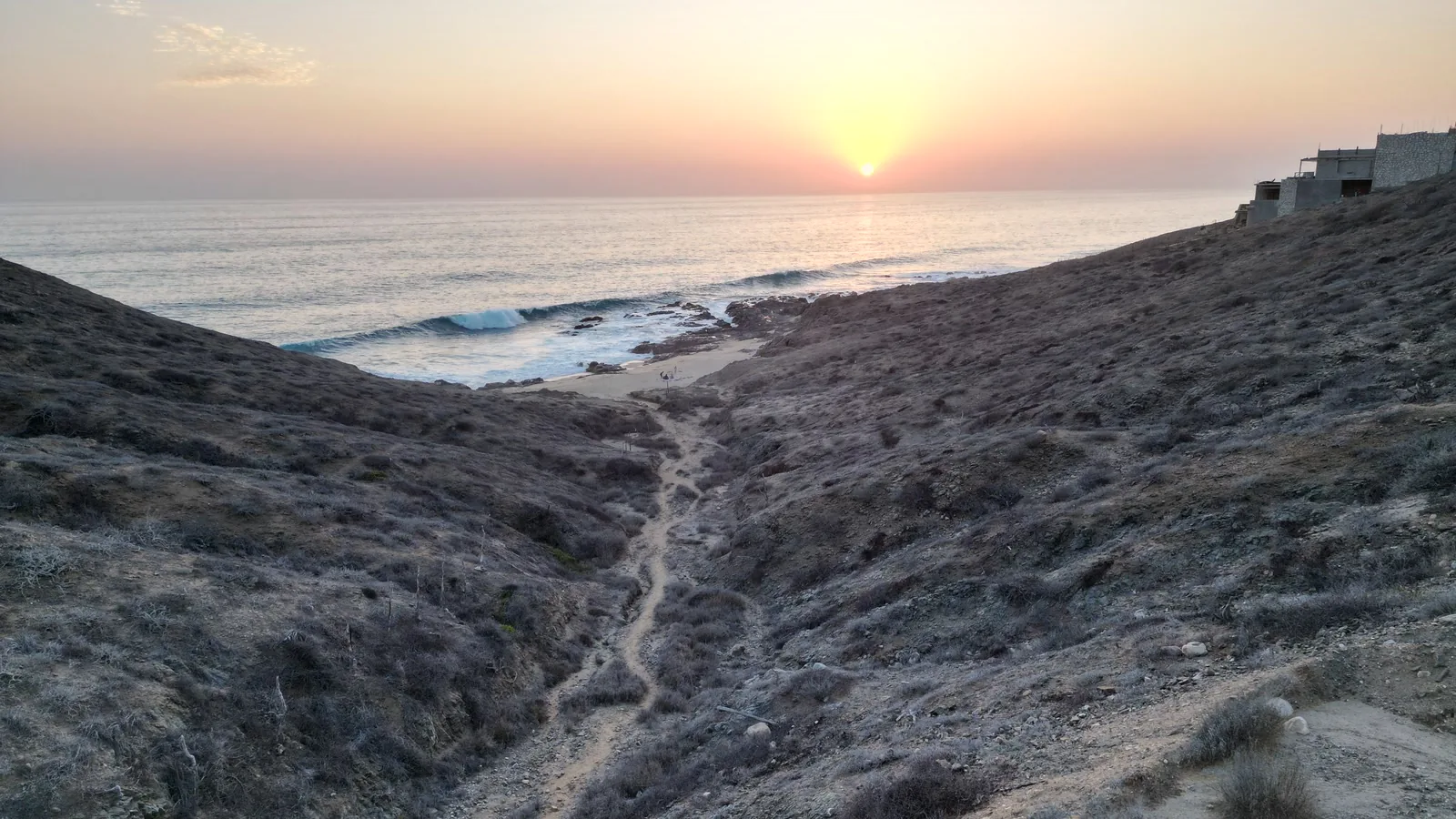
Highway 19 from La Paz through Todos Santos down to Cabo is paved and honestly scenic. Turn off it toward Cerritos or into most Pescadero neighborhoods and you're on dirt. Some of it is well-graded and fine in a sedan. Some of it will eat a sedan alive, especially after rain; at the tail end of hurricane season, some roads briefly stop being roads.
You don't absolutely need 4WD, but I'd strongly recommend a truck or SUV. And a thing nobody mentions until you're at the border: your U.S. car insurance does not cover you in Mexico. Zero. Mexican auto policies are cheap (Baja Bound, Lewis & Lewis) and there's no reason not to have one.
05The community is the whole point
The corridor attracts a certain type. Artists. Surfers. Entrepreneurs who cashed out of something to start something else. Retired couples who didn't want to sit in a golf community waiting to die. Farmers, musicians, a surprising number of ex-tech people.
House parties where the guy next to you is a retired hedge fund manager and the woman across the table is a local fisherman's wife. It's mixed. That's what makes it good.
It's small enough that you'll recognize faces at the coffee shop within a couple of weeks, big enough that you'll keep meeting interesting people for years. The social life revolves around surf, food, and casual hangs: sunset beers, art openings, farm dinners in Pescadero where the food was in the ground that morning.
Fair warning: if you need a Target run or a reliable Costco trip, you will get frustrated. The nearest Costco is in Cabo, over an hour south. You learn to plan ahead or you go crazy. Your call.
06The cost of living, for real
Everyone wants the coastal-California comparison. Here it is.
| Line item | Corridor | North County San Diego |
|---|---|---|
| New 2-bed, walkable to beach | $1,500–3,000/mo | $4,500+/mo |
| Local-style 2-bed, in town | Well under $1,500/mo | — |
| Dinner at a quality restaurant | $15–30/person | $60–100/person |
| Doctor & dental care | 50–70% less | — |
| Local produce, fish, carnicería | Well below Whole Foods | — |
| Imported American brands | Often 2× U.S. price | — |
Groceries split both ways: local produce from the Pescadero farms and fish caught that morning are far cheaper; the $4 jar of peanut butter is $8 here. You adjust. You eat more local. The local food is better anyway.
Bottom line: most expats I talk to estimate they live on 40–60% of what the same lifestyle costs in coastal California. The savings aren't uniform, but the net number is significant.
07Visas: pick the right one
Tourist status (FMM). Up to 180 days per entry. Plenty of people live here on border runs. It works until it doesn't. There's no guarantee you get the full 180 each time, and enforcement shifts without warning. Risky way to build a life.
Temporary Resident. One to four years of proper legal residency: easier banking, cleaner property ownership, vehicle importation, smoother healthcare. You'll need to prove financial solvency, and you start the application at a Mexican consulate while still in the States.
Permanent Resident. After four years on temporary status, or directly at higher financial thresholds. No renewals, indefinite right to live here.
My advice: if you're actually building a life here, get the temporary residency. It simplifies everything and removes the anxiety of depending on tourist status for your whole existence.
08The adjustment that catches everyone
The hardest part isn't the paperwork, the internet, or the dirt roads. It's the speed. Things. Move. Slower.
Your contractor says Tuesday; he means Thursday, maybe. The government office that's supposed to be open from 9 to 2 is closed for reasons nobody explains. The water truck was supposed to come yesterday. It'll come tomorrow. Probably.
You can rage against this. Some people do, and they last about a year before they're back in Phoenix complaining that "Mexico doesn't work." Or you can recalibrate. Build slack into your timelines. Find the humor in it.
And then one morning you check the surf, paddle out into clean overhead waves with nobody else around, sit down to work at a desk that overlooks the Pacific, and you think: yeah. This is why.
I still run a real business. I close real deals and meet real deadlines. But I do it on my terms, in a place that feeds my soul in ways twenty years of American commercial real estate never did. The tradeoffs are real. For me, and for a growing community of people who've figured out the same thing, they're absolutely worth it.
Curtis brokers real estate through Selling Sur in the Todos Santos–Pescadero–Cerritos corridor, and lives in Pescadero, at San Pedrito Beach. He doesn't sell a fantasy; he sells information so you can make a smart call, including the call that Baja isn't right for you.