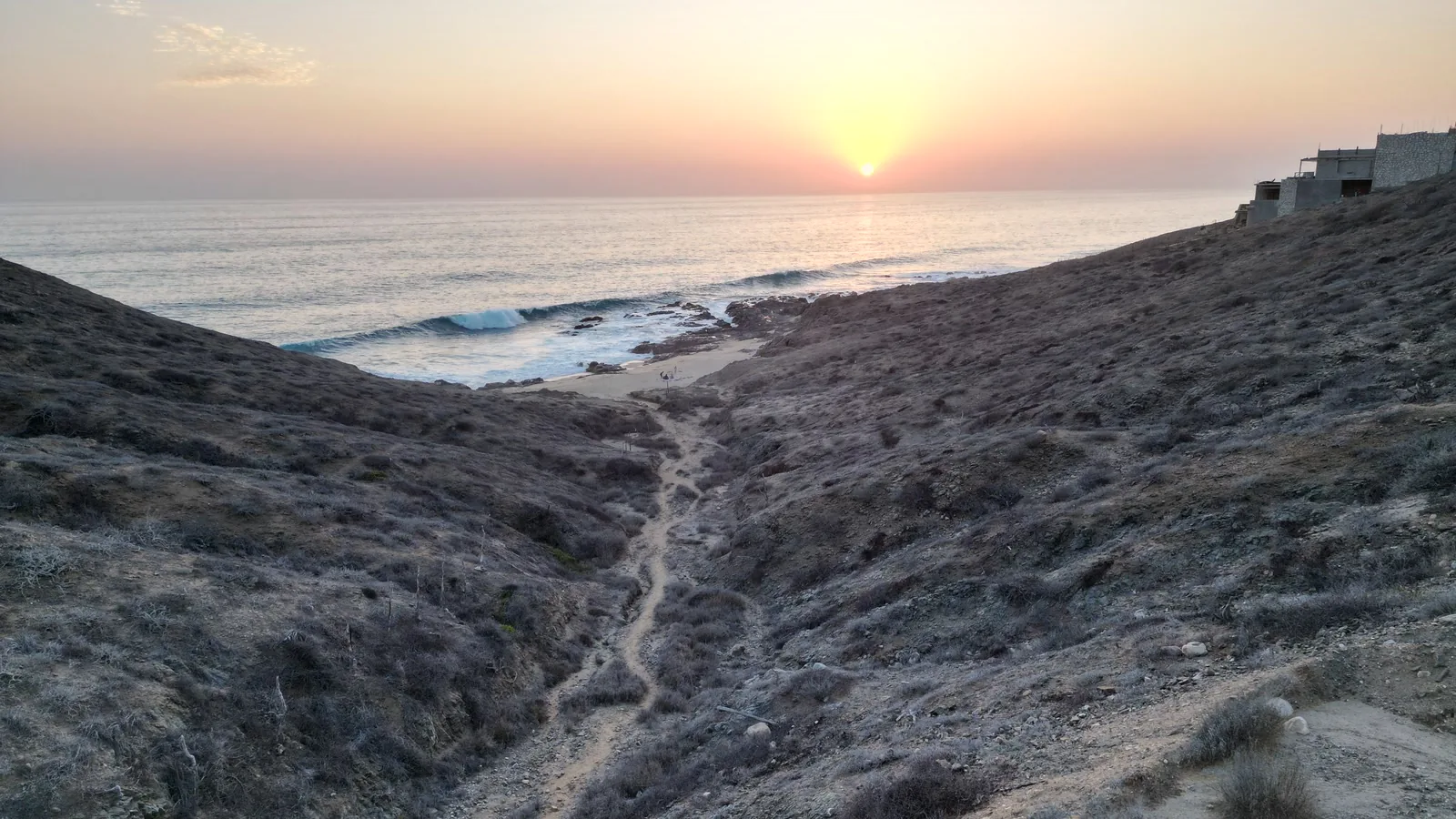
01The short answer
Everything works, differently. Water comes from the mountains and lives in tanks on your roof. Power comes from CFE and increasingly from your own panels. Internet comes from space for 1,405 pesos a month, and it's good. The corridor runs a hybrid of grid and self-supply, and homes built with that in mind barely notice the difference from the States.
The theme of this whole article: infrastructure here is a property-level question rather than a city-level one. Two lots 500 meters apart can have completely different water, power, and internet situations, which is why this briefing exists and why it's half of every site visit I do.
02Water: mountains, tanks & trucks
Start with the miracle: this desert corridor has water because the Sierra de la Laguna catches late-summer storms and feeds the aquifers below (the full mechanics are in the weather guide). Farms in Pescadero have run on it for a century.
How it reaches your house depends on where the house is. In town, municipal lines deliver on a schedule rather than continuously, which is why every roof carries a black tinaco (storage tank) and better homes add an underground cisterna with a pressure pump. The tank system means a delivery gap is invisible to you; the shower neither knows nor cares.
Beyond the lines (much of the beach zones and rural Pescadero) homes run on wells where permitted, or on trucked water: the pipa fills your cisterna on a standing schedule. It sounds rustic and becomes exactly as routine as a gas bill.
Drinking water is its own stream: garrafones (20L bottles) delivered or swapped at the tienda, or a maintained reverse-osmosis system under the counter. Water quality is a source-and-maintenance question at each house, so test a private well and verify the municipal supply at the exact address.
03Electricity: CFE and its famous tiers
CFE, the national utility, serves the whole corridor, and the thing to understand is the tariff structure: rates are subsidized while your usage stays modest, then jump sharply once sustained consumption (in practice: air conditioning season) pushes you into the high-consumption bracket, where the subsidy disappears. That's the mechanism behind every shocked September bill story you'll hear at dinner.
Most of the year, coastal homes here run on cross-breeze and ceiling fans, and electric bills stay small. August through October, mini-splits earn their keep and the meter spins. Our own last cycle, bundled with septic service on the lot, ran just over 4,000 MXN ($232); I'll publish a clean seasonal breakdown once I've logged a full summer.
Outages are real but mostly brief: summer grid strain, and the occasional storm-related cut in September (storm-season prep lives in the safety guide). The standard responses, in ascending order of seriousness: candles and patience, a small generator, or the actual answer, which is the next section.
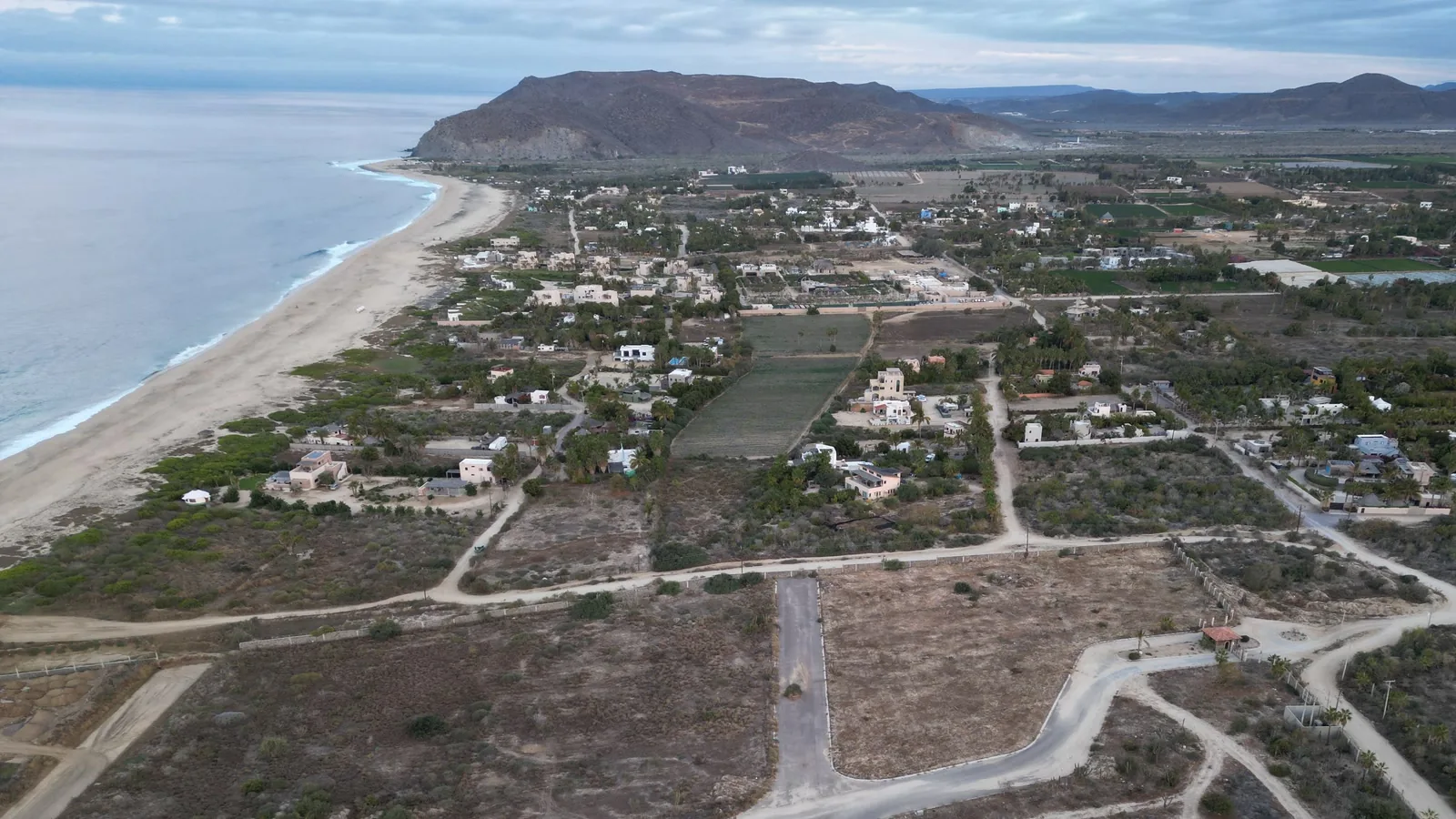
04The solar math
Here's where the desert pays you back. The corridor gets sun at a rate most solar markets fantasize about, CFE's high tier makes avoided consumption valuable, and panel-plus-battery systems keep dropping in price. The result: solar here has some of the fastest payback math I've seen anywhere, and I've underwritten a lot of buildings.
New construction increasingly treats solar as default, and a battery bank converts the outage question into a non-event. If you're building, run the numbers with a local installer before you pour the slab; conduit is cheap on day 1 and annoying on day 400. If you're buying an existing home, an installed system is a genuine value-add rather than a novelty.
05Internet: the Starlink question, answered
The question every remote worker asks first, so here's my actual bill: Starlink residential, 1,405 MXN a month, about $78 USD (it rose 100 pesos this summer). It covers the entire corridor including the lots at the end of the dirt road, sets up in an afternoon, and runs video calls, uploads, and streaming without drama. I operate a real business on it.
Fiber exists too: Totalplay and Telmex reach parts of Todos Santos proper and some newer developments, for less money than Starlink where available. The practical playbook: if fiber passes your door, take it; everywhere else, Starlink ended the connectivity conversation around here a few years ago.
Remote-work reality check from someone doing it: the corridor's constraint on your career is time zone (MST, convenient for US work) and self-discipline in a place with this much sunshine. Bandwidth stopped being the constraint.
06Phones
Telcel dominates. Coverage is solid in the towns and along Highway 19, thinner on remote beach roads and in the mountains. Prepaid plans are cheap, and most expats run either a Telcel SIM alongside their US number or a US plan with Mexico roaming built in (T-Mobile and others include it). WhatsApp is the corridor's real phone system; your plumber, your neighbor, and your surf report all live there.
07Before you buy a lot: the utility checklist
The broker section, because this is where infrastructure becomes money. Questions I make every buyer answer before falling in love:
1. Water: municipal hookup, well rights, or pipa-only? What does the cisterna hold?
2. Power: is CFE at the lot line, or how many poles away? Line extensions are negotiable line items, and I've watched them change deals.
3. Internet: fiber, or budget the Starlink kit?
4. Septic: what's actually in the ground, and when was it serviced?
5. Access: who maintains the road, and what does it look like after a September storm?
None of these kill a deal by existing; they kill deals by being discovered late. Getting them answered up front is a normal part of buying here, and it's what I do all day at Selling Sur.
08Quick answers
Can I run AC all summer? You can; you'll pay CFE's high tier for it. The corridor pattern is mini-splits in bedrooms for the muggy months plus solar if you're a heavy user.
Is well water safe? It depends on the well and its treatment system. Test it as part of due diligence; a nearby property may have a different result.
What does a pipa delivery cost? It varies by volume and distance; it's a routine expense rather than a scary one. Current local pricing changes enough that I'd rather you ask than quote you a stale number.
Do I need a generator? With solar and batteries, no. Grid-only homes keep a small one for September peace of mind.
Propane? Stationary tanks, refilled by truck a few times a year, run stoves and water heaters. Cheap, boring, works.
09Sources
[1] Comisión Federal de Electricidad, Tarifa DAC · [2] Comisión Federal de Electricidad, domestic tariff classes · [3] Starlink México, service plans and address availability · [4] Telmex, coverage maps · [5] Diario Oficial, NOM-127-SSA1-2021 water-quality standard · [6] CONAGUA, Baja California Sur aquifer availability. These sources establish national or provider frameworks. They do not establish service, rate, capacity, water quality, or road access for a particular property. Confirm the current facts with the provider, authority, and transaction team before relying on them.
Curtis brokers real estate through Selling Sur in the Todos Santos–Pescadero–Cerritos corridor, and lives in Pescadero, at San Pedrito Beach. He doesn't sell a fantasy; he sells information so you can make a smart call, including the call that Baja isn't right for you.